How to Choose a Dating Service
Choosing a dating service starts with understanding your goals, your comfort level, and the type of experience you want online. Here's the actual decision framework we use across every category guide on this site.
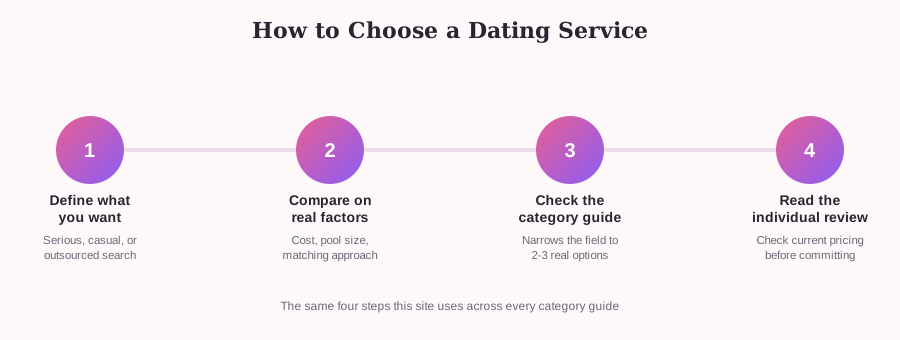
Step 1: Define what you actually want
"Serious relationship" vs "casual" is the first fork, but it's not the only one. Also consider: how much time can you realistically invest in searching yourself (an app) versus paying someone else to do it (a matchmaker — see matchmaking services)? Do you want a general platform with maximum pool size, or a dedicated one — faith-based, LGBTQ+, age-focused — that pre-filters for something specific to you?
Step 2: Compare on the factors that actually predict fit
- Cost structure — freemium apps (pay to remove friction) vs subscription platforms (pay for access) vs matchmaking fees (pay for a person's time) are different financial commitments, not just different price points.
- Local pool size — a platform's total membership claim matters less than its actual active user base in your specific area; check reviews and local anecdotes, not just marketing numbers.
- Matching approach — algorithmic/questionnaire-driven (eharmony-style) vs browse-and-swipe (Tinder-style) vs human matchmaker (Tawkify-style) genuinely changes the day-to-day experience, independent of cost.
- Safety and verification features — identity/photo verification, blocking and reporting tools, and how a platform's moderation actually works in practice, not just what it claims.
Step 3: Check the category guide before the individual platform
Once you know roughly which category fits — serious relationships, casual dating, LGBTQ+ dating, faith-based dating, over 40/50, professionals, or international — that category's guide narrows the field to 2-3 platforms actually worth comparing, instead of starting from scratch across dozens of options.
Step 4: Read the individual review before signing up
Our platform reviews are scored against a published methodology (see how we review) and updated on a recurring basis — check the actual current pricing tier and any recent red flags before committing to a longer subscription.