How Dating Services Work
Dating services use profiles, preferences, communication tools, and safety features to help people connect — but the mechanics differ more between platforms than most people realize. Here's what's actually happening behind the three main models.
Profile creation and matching logic
Every platform starts with a profile, but what drives matching varies a lot: swipe-based apps (Tinder, Bumble) surface profiles based on stated preferences and location, with the user doing the filtering. Questionnaire-driven platforms (eharmony) use a compatibility algorithm to pre-select matches before you see them at all. Prompt-based platforms (Hinge) sit in between — algorithmic suggestion, but with more profile content to evaluate per match.
Communication and messaging systems
Most platforms keep messaging inside the app rather than exposing contact details, partly for user safety and partly to keep engagement on-platform. Some (Bumble) add structural rules — like requiring the woman to message first in different-sex matches — that change the dynamic beyond just the technology.
Business models: what you're actually paying for
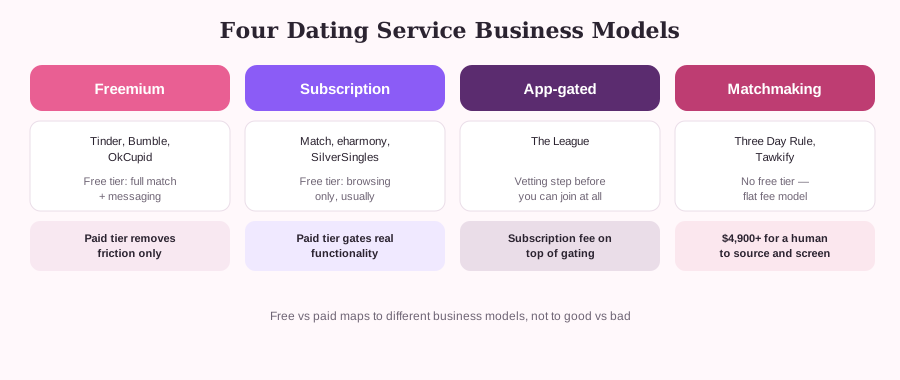
- Freemium apps (Tinder, Bumble, OkCupid) — free to join and match; paid tiers remove friction (unlimited likes, seeing who liked you) rather than unlocking access itself.
- Subscription platforms (Match, eharmony, SilverSingles) — often a limited free tier, with real functionality (messaging, full profile visibility) gated behind payment.
- Application-gated apps (The League) — a vetting step before you can join at all, on top of a subscription.
- Matchmaking services (Three Day Rule, Tawkify) — a flat fee, often several thousand dollars, for a human matchmaker to source and screen candidates on your behalf rather than software doing the matching. See how matchmaking services work for the full breakdown.
Safety and moderation infrastructure
Verification (photo or ID-based), reporting tools, and content moderation vary significantly by platform and are worth checking directly rather than assuming — a platform's safety marketing doesn't always match what its actual tools do. See our dating safety guide for the precautions that apply regardless of which platform's infrastructure you're relying on.
Where to go next
Once you understand the mechanics, how to choose a dating service walks through matching that mechanics to your actual goals.